

Motorcycle Final Drive Systems: Chain, Belt, and Shaft Drive
November 09, 2026
Motorcycles are more than just machines for getting from one destination to another. For many riders, they represent freedom, excitement, and a passion for the open road. But have you ever wondered how the power generated by your motorcycle’s engine actually reaches the rear wheel? One of the most important components responsible for this process is the motorcycle final drive system.
The final drive transfers power from the transmission to the rear wheel, allowing the motorcycle to move. Depending on the motorcycle’s design, this system can use a chain, belt, or driveshaft. Each option has its own advantages, disadvantages, maintenance requirements, and performance characteristics.
Understanding how these systems work can help you choose the right replacement components, improve your motorcycle’s performance, and find a setup that matches your riding preferences.
Let’s explore the three main types of motorcycle final drive systems and discover when upgrading or replacing their components makes sense.
How Does a Motorcycle Final Drive Work?
Before looking at the different final drive options, it’s important to understand how power travels through a motorcycle. The process begins inside the engine, where combustion generates mechanical power. Every motorcycle engine operates within a particular RPM range, commonly known as its powerband.
For example, many large V-twin engines produce their power at relatively low RPMs, while high-performance sportbike engines can operate at considerably higher engine speeds. The transmission helps manage these different engine speeds by providing multiple gear ratios. Without a transmission, a motorcycle would have significant limitations. It might accelerate effectively at low speeds but struggle to maintain higher speeds efficiently.
By selecting different gears, riders can achieve strong acceleration while keeping engine RPM within an appropriate operating range during highway cruising. Once power passes through the transmission, it reaches the rear wheel through the final drive.
Modern motorcycles generally use one of three final drive configurations:
- Chain drive
- Belt drive
- Shaft drive
Although all three systems perform the same basic function, their construction, efficiency, durability, and maintenance needs differ considerably.
Motorcycle Chain Drive
A chain is one of the most traditional and widely used methods of transferring engine power to a motorcycle’s rear wheel. A chain-driven motorcycle uses two sprockets: a smaller front sprocket connected to the transmission output shaft and a larger rear sprocket attached to the rear wheel. The chain connects these sprockets and transfers rotational force between them.
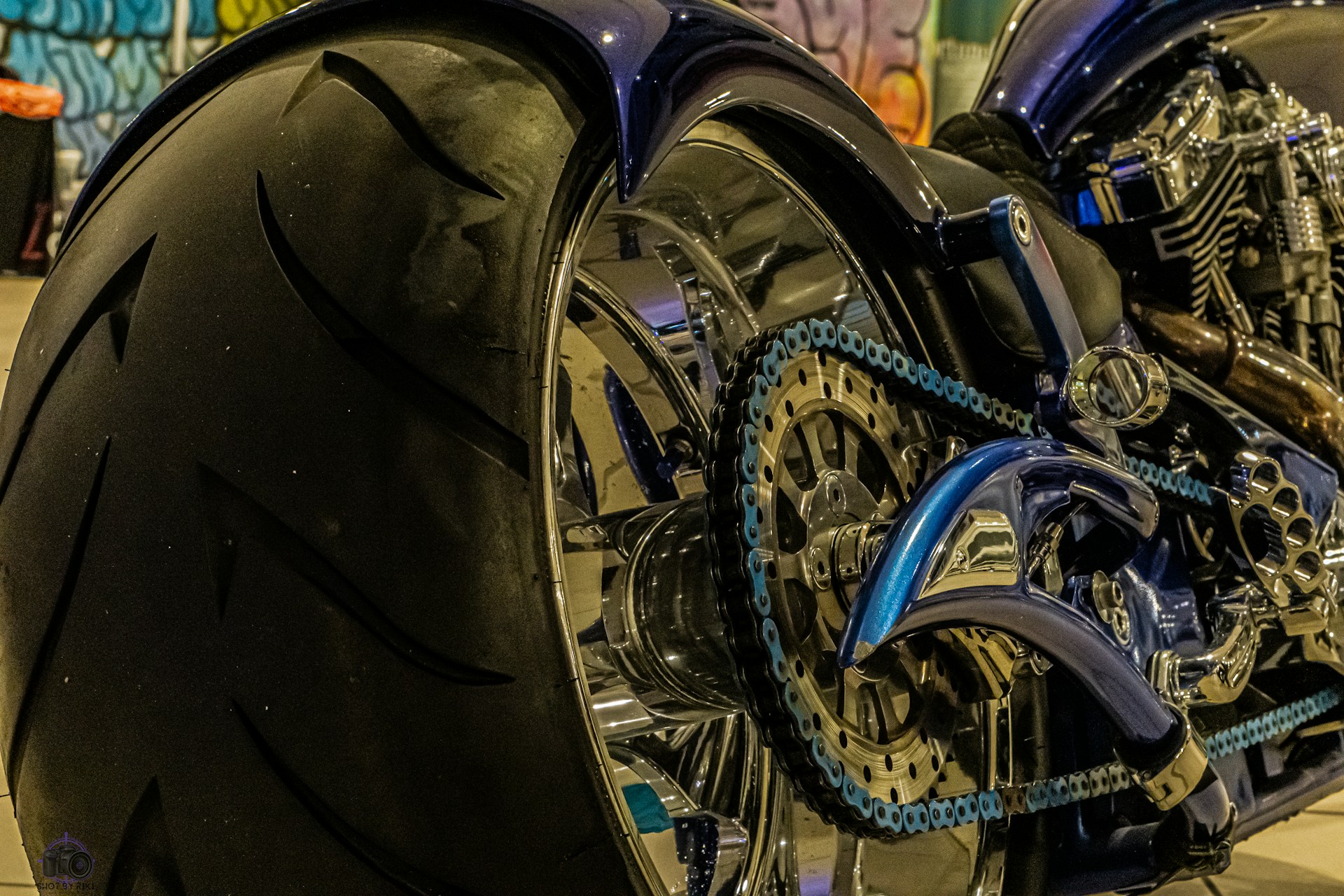
Advantages of chain drive
Chain-driven motorcycles offer several benefits:
- Excellent power transmission: Chain systems are highly efficient and lose relatively little power during operation.
- Affordable replacement parts: Chains and sprockets are widely available in different sizes and specifications.
- Easy gearing adjustments: Changing the front or rear sprocket allows riders to modify acceleration and cruising characteristics.
- Straightforward installation: With the correct tools, replacing a motorcycle chain is generally easier than replacing a belt or servicing a shaft drive.
- Wide aftermarket selection: Riders can choose from different materials, finishes, chain pitches, and performance specifications.
Disadvantages of chain drive
Despite their advantages, chain systems require regular attention. The chain needs periodic cleaning, lubrication, and tension adjustments. Neglecting these tasks can accelerate wear and damage the sprockets.
A damaged or poorly maintained chain can also create serious safety risks. In extreme situations, a broken chain may damage the motorcycle or cause the rider to lose control. For this reason, regular inspection and proper chain adjustment are essential.
Motorcycle Belt Drive
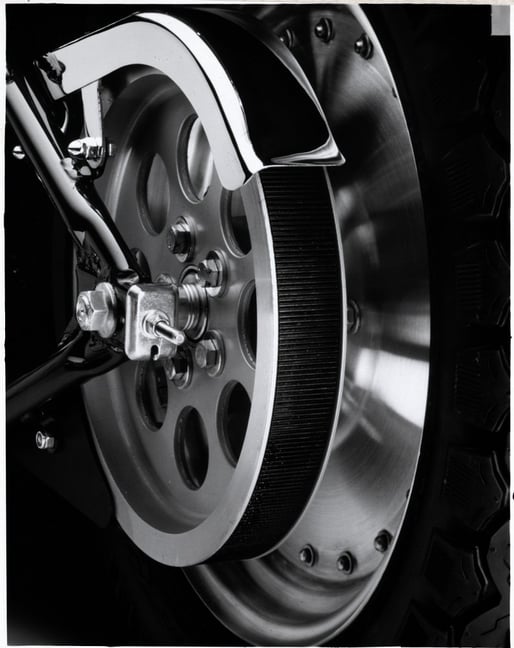
Belt-driven motorcycles transfer engine power through a reinforced belt connected to front and rear pulleys. This arrangement is particularly common on cruiser motorcycles, including many Harley-Davidson models, although other manufacturers also use belt-driven designs.
Unlike a traditional chain, a motorcycle drive belt does not require regular lubrication. Its operation is also generally quieter and cleaner.
Advantages of belt drive
- Low maintenance: Belts do not need routine lubrication or the same frequent adjustments as chains.
- Quiet operation: Belt systems generally produce less mechanical noise.
- Clean performance: There is no chain lubricant being thrown onto the motorcycle’s wheel, swingarm, or surrounding components.
- Long service life: Properly maintained drive belts can cover substantial distances before replacement becomes necessary.
- Reduced maintenance mess: Riders spend less time cleaning grease and lubricant from the rear wheel area.
Disadvantages of belt drive
Belt systems also have a few limitations. Because most motorcycle drive belts are manufactured as continuous loops, installing a replacement can be more complicated than fitting a chain. Depending on the motorcycle, replacing the belt may require removing several components.
Another disadvantage is that a damaged belt can leave the rider stranded. Unlike some chain repairs, a broken belt is generally not something that can be reliably fixed at the roadside. Changing the final drive ratio is also possible, but finding compatible pulleys and belts can be more challenging than sourcing different chain sprockets.
Motorcycle Shaft Drive
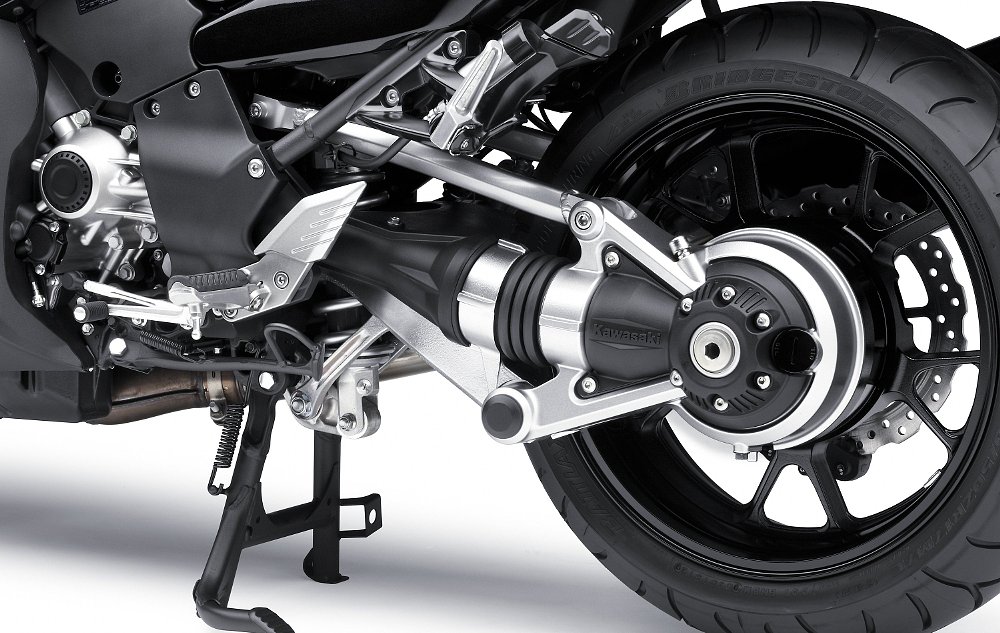
Shaft drive is another established motorcycle final drive design. It is commonly found on touring motorcycles, sport-touring models, and certain commuter motorcycles. Instead of using a chain or belt, this system transfers engine power through a rotating driveshaft.
At the rear wheel, a set of gears, usually involving a bevel gear arrangement, redirects the rotational movement to drive the wheel. The basic principle is similar to the driveshaft systems used in rear-wheel-drive automobiles.
Advantages of shaft drive
- Minimal routine maintenance: Shaft systems generally require less frequent attention than chain drives.
- Clean operation: There is no exposed chain lubricant or belt debris.
- Durability: Properly maintained shaft drives can provide reliable service over many years.
- Convenience for touring: Riders covering long distances can benefit from reduced routine drivetrain maintenance.
Disadvantages of shaft drive
The biggest limitation is reduced flexibility when modifying the final drive gearing. Unlike chain and belt systems, shaft-driven motorcycles generally cannot change their final drive ratio simply by replacing sprockets or pulleys.
Shaft drive assemblies can also be heavier and more complicated to repair. When servicing is required, specialized knowledge and replacement components may be necessary. Nevertheless, for riders who prioritize convenience and long-distance reliability, shaft drive remains an attractive option.
Why Should You Upgrade Your Motorcycle Final Drive?
There are several reasons to replace or upgrade motorcycle final drive components. Sometimes the original equipment simply wears out. In other situations, riders want to change their motorcycle’s acceleration, cruising RPM, appearance, or overall performance.
Here are some of the most common reasons to consider an upgrade.
Replacing Worn or Damaged Components
Motorcycle chains, sprockets, belts, and pulleys are subject to regular wear. For example, a chain can become worn after extended use, while a belt may suffer damage from debris, excessive tension, or age.
It’s worth understanding that motorcycle chains do not actually stretch in the conventional sense. What riders commonly describe as chain stretch is usually the result of wear around the pins and internal link components. This wear increases the chain’s overall length.
Belts can also experience deterioration, although their construction and operating characteristics are different. When original components reach their service limits, replacement is essential.
Aftermarket parts can sometimes provide advantages over factory components, including:
- Improved durability.
- Reduced component weight.
- Different material options.
- Better corrosion resistance.
- More attractive designs and finishes.
For example, replacing a heavy steel rear sprocket with a suitable aluminum version can reduce rotating and unsprung weight. Reducing this type of weight can contribute to improved motorcycle handling and responsiveness.
Improving Acceleration and Top Speed
One of the biggest advantages of chain and belt final drive systems is the ability to modify their gear ratios. Changing sprocket or pulley sizes can alter how your motorcycle accelerates and performs at higher speeds.
The basic principle is straightforward:
Smaller front sprocket and larger rear sprocket
This combination increases the final drive ratio. The motorcycle generally gains stronger acceleration and more responsive low-speed performance, but engine RPM will be higher at a given road speed. The trade-off is a lower theoretical top speed in a given gear.
Larger front sprocket and smaller rear sprocket
This arrangement reduces the final drive ratio. It can lower engine RPM at cruising speeds and potentially improve fuel economy under suitable conditions. However, acceleration may become slower, and the engine might struggle to pull the taller gearing if the ratio is too high. The best combination depends on the motorcycle’s engine characteristics, riding conditions, and intended use.
Reducing Unwanted Engine Vibrations
Changing final drive gearing can also affect engine RPM at specific road speeds. For instance, imagine that your motorcycle develops noticeable vibration when cruising at your usual highway speed. Adjusting the final drive ratio may change the engine RPM enough to move it away from that particular vibration range.
Although this approach does not eliminate every possible vibration problem, it can sometimes improve cruising comfort. Before changing gearing, however, make sure that the vibration is not caused by worn engine mounts, wheel imbalance, chain problems, or other mechanical issues.
Optimizing Your Motorcycle for Track Riding
Track riders often have different gearing requirements from everyday road users. On a tight circuit, maximum top speed may be less important than acceleration, corner exit performance, and throttle response. Changing sprocket sizes can help match the motorcycle’s gearing to a particular circuit.
For example, a shorter final drive ratio may provide better acceleration between corners, while a longer ratio may be more suitable for a track with extended straights. Another benefit is flexibility. Riders can experiment with different sprocket combinations to find a suitable setup for each circuit.
Reducing Weight on Sportbikes
Weight reduction is especially important for riders looking to improve sportbike performance. Many motorcycles leave the factory with relatively heavy chain and sprocket combinations. One popular modification is converting from a 525 or 530 chain to a narrower 520 chain setup.
A 520 conversion can reduce drivetrain weight, depending on the components used. However, selecting the correct chain is essential. The replacement must meet the motorcycle’s power requirements and be compatible with the sprockets. A lighter chain is not automatically better if it compromises strength, durability, or reliability.
Choosing the Right Motorcycle Drive Belt
If your motorcycle uses a belt final drive, you may eventually need to replace the original belt because of wear or damage. You might also consider changing the pulley sizes to adjust your final drive gearing. The first step is identifying your motorcycle’s exact year, manufacturer, and model.
These details help ensure that the replacement belt has the correct dimensions, tooth profile, and compatibility. If you plan to change pulley sizes, check whether a different belt length is required. Some motorcycles offer limited adjustment at the rear axle, meaning a gearing modification could require additional mechanical changes.
Motorcycle Drive Belt Materials
Drive belts are manufactured using different reinforcement materials, each offering particular characteristics.
Common materials include:
- Carbon fiber.
- Aramid fibers.
- Kevlar.
- Fiberglass.
- Polymer-based reinforcement materials.
The reinforcement used in a belt affects its strength, flexibility, durability, and resistance to stretching. There is no universally perfect belt material for every motorcycle. The best choice depends on the manufacturer’s specifications and the intended application.
With correct installation and maintenance, some motorcycle drive belts can last for tens of thousands of miles. Actual service life varies according to riding conditions, maintenance, and belt quality.
When replacing belt drive components, also check pulley compatibility. Many motorcycle applications use steel front pulleys and aluminum rear pulleys, although specifications differ between manufacturers.
Choosing Motorcycle Sprockets and Chains for Sportbikes
If you ride a sportbike, selecting the right chain and sprockets is important for both performance and reliability. Motorcycle sprockets are available in several materials, including steel, aluminum, and hard-anodized aluminum.
Steel Sprockets
Steel sprockets are known for their durability and resistance to wear. They are generally heavier than aluminum alternatives but are often preferred by riders who prioritize longevity and everyday reliability.
Aluminum Sprockets
Aluminum sprockets are lighter than comparable steel components. Reducing rotating weight can be beneficial for performance-oriented motorcycles, although aluminum sprockets may wear faster depending on their construction and riding conditions.
Hard-Anodized Aluminum Sprockets
Hard-anodized aluminum sprockets combine aluminum’s relatively low weight with an additional surface treatment designed to improve wear resistance. They can be a useful option for riders seeking a balance between weight reduction and durability.
Some manufacturers also produce lightweight steel sprockets with strategically removed material to reduce weight without sacrificing the strength required for their intended application.
How to Choose the Correct Motorcycle Chain
Before purchasing a replacement chain, you need to know the correct chain size, length, and specifications for your motorcycle. If you are unsure about the required length, consult the manufacturer’s specifications rather than guessing.
A chain that is too short will not fit, while an excessively long chain will need to be shortened using the correct equipment. A motorcycle chain breaker and riveting tool may be necessary, depending on the chain and master link design. You should also consider the type of master link and sealing system.
Clip-Style Master Links
A clip-style master link uses a retaining clip to secure the connecting link. Its main advantages include:
- Relatively simple installation.
- Basic tool requirements.
- Easier chain removal.
- Convenient roadside replacement when appropriate.
However, correct installation is extremely important. The retaining clip must be fitted in the correct direction and secured according to the chain manufacturer’s instructions. Some racing organizations also prohibit clip-style master links for certain competition classes.
Rivet-Style Master Links
Riveted master links connect the chain using specially designed pins that are expanded with a riveting tool. They provide a secure connection when installed correctly and are commonly used on modern motorcycle chains. Their main advantages include reliable retention and suitability for many high-performance applications.
The downside is that installation requires the correct chain breaker and riveting equipment. Improper riveting can compromise chain safety, so always follow the manufacturer’s specifications.
Understanding Motorcycle Chain Types
Not all motorcycle chains are constructed in the same way. One important difference is whether the chain includes sealing rings designed to retain internal lubricant and prevent dirt from entering the moving components.
The three main categories are non-sealed, O-ring, and X-ring chains.
Non-Sealed Motorcycle Chains
Non-sealed chains do not have rubber sealing rings between their internal components. Because there are no sealing rings, they generally have less internal friction and can be relatively inexpensive. However, dirt, water, and road debris can enter the chain more easily.
This means they require frequent cleaning and lubrication to maintain performance and minimize wear. Non-sealed chains may still be suitable for certain racing or specialized applications where low friction and specific maintenance routines are priorities.
O-Ring Motorcycle Chains
O-ring chains use small circular rubber seals positioned around the chain pins. These seals help retain factory-applied internal lubricant while preventing dirt and moisture from entering the critical moving areas. Compared with non-sealed chains, O-ring models generally require less frequent lubrication and offer improved protection against contamination.
They still need regular cleaning, lubrication, and inspection. When maintaining an O-ring chain, use cleaning products and lubricants approved by the chain manufacturer to avoid damaging the seals.
X-Ring Motorcycle Chains
X-ring chains use specially shaped sealing rings with an X-shaped cross-section. This design provides multiple sealing contact surfaces and is intended to improve lubricant retention while reducing friction. X-ring chains are often more expensive than traditional O-ring versions, but they can offer excellent durability and performance.
They are popular among riders who want a high-quality chain for street riding, touring, or demanding motorcycle applications. The right chain depends on your motorcycle, riding style, maintenance preferences, and budget.
Can You Replace a Motorcycle Final Drive Yourself?
Whether you can replace your motorcycle’s final drive at home depends largely on the type of system installed. Chain replacement is generally the most accessible job for experienced home mechanics.
Belt replacement is usually more complicated, while shaft drive maintenance often requires specialized knowledge. Let’s look at what each job involves.
Replacing a Motorcycle Chain
If you are comfortable performing basic motorcycle maintenance, replacing a chain may be a manageable DIY project.
You will need:
- A suitable motorcycle stand or lifting equipment.
- Socket and wrench sets.
- A chain breaker tool.
- A riveting tool if using a rivet-style master link.
- A torque wrench.
- A replacement chain and, where appropriate, new sprockets.
The rear wheel must be lifted safely so that the chain and sprocket assembly can be accessed. Depending on the motorcycle, some body panels or fairings may also need to be removed.
After removing the old chain, inspect the sprockets for worn or damaged teeth. It is generally advisable to replace the chain and sprockets together when they show corresponding wear. Install the new chain, connect the master link according to the manufacturer’s instructions, and adjust the chain slack to the specified measurement.
Finally, tighten all fasteners to the correct torque and verify that the rear wheel is aligned properly. If you are unfamiliar with chain riveting or wheel alignment, having a qualified motorcycle technician complete the installation is the safer choice.
Replacing a Motorcycle Drive Belt
Replacing a motorcycle drive belt can involve considerably more work. On some Harley-Davidson models, for example, the procedure may require removing several components, including:
- Saddlebags and rear suspension components.
- Primary drive covers.
- Clutch components.
- Inner primary housing.
- Rear wheel and related hardware.
The exact procedure depends on the motorcycle’s design. Once the necessary components have been removed, the old belt can be taken out and the replacement installed.
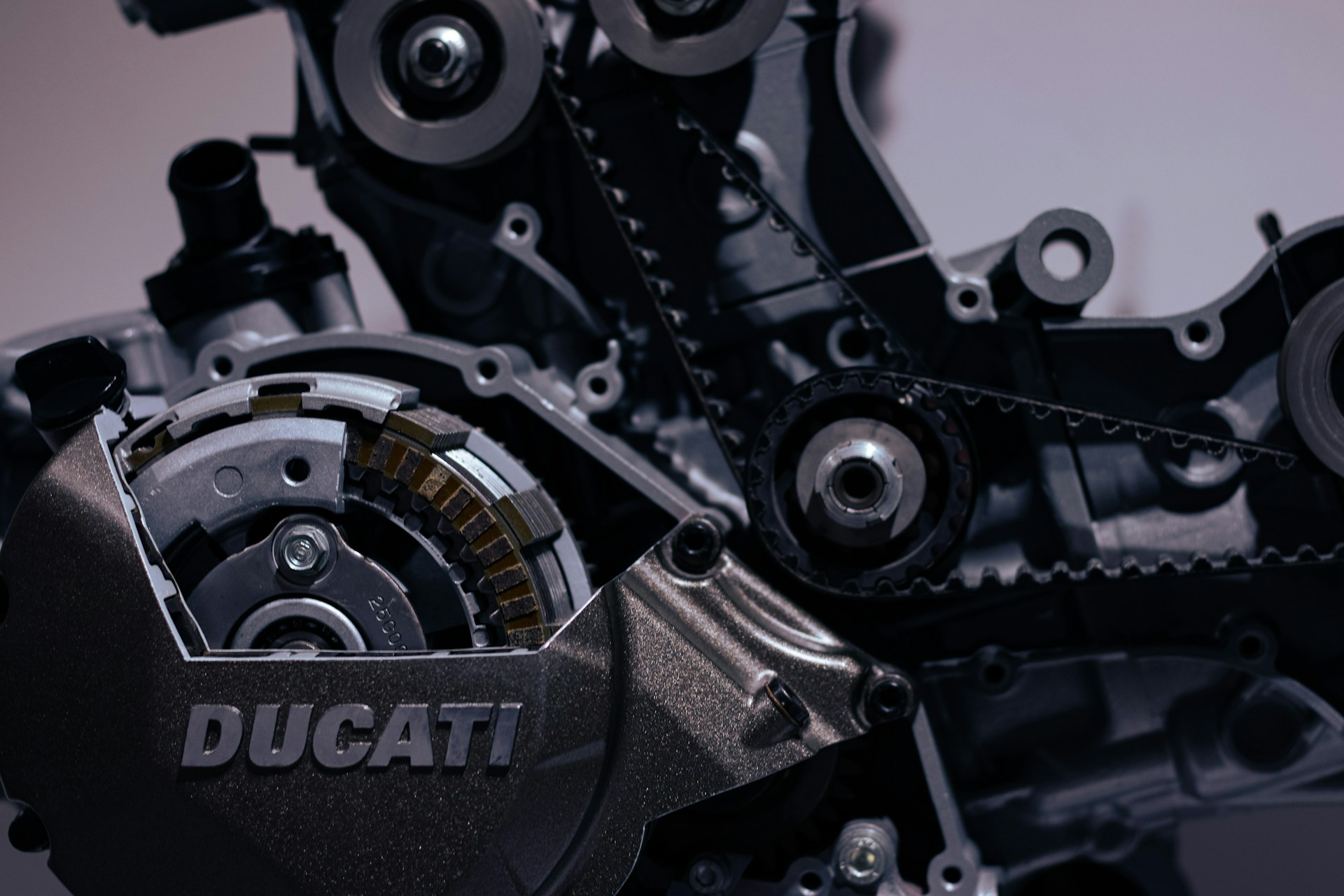
It is also a good opportunity to inspect the pulleys, bearings, and surrounding components. Before starting the job, make sure you have all required replacement parts, including gaskets, seals, and fluids that may need to be renewed during reassembly.
Although experienced mechanics can complete this work themselves, it is a time-consuming project that requires appropriate tools and careful preparation.
Maintaining a Motorcycle Shaft Drive
Shaft-driven motorcycles are generally easier to live with when it comes to routine final drive maintenance. Unlike chain and belt systems, shaft drives do not require regular chain cleaning, lubrication, or tension adjustment.
However, they are not completely maintenance-free. Depending on the motorcycle, periodic servicing may include checking and replacing final drive gear oil, inspecting seals, and examining the driveshaft and associated joints.
Always follow the maintenance schedule in your owner’s manual. One important limitation is that shaft-drive gearing generally cannot be changed through simple sprocket or pulley replacements. The advantage is that riders can enjoy a relatively low-maintenance drivetrain without frequently adjusting or cleaning exposed drive components.
Final Thoughts: Which Motorcycle Final Drive Is Best?
Choosing the right motorcycle final drive system depends on what you expect from your bike. Each design offers a different combination of performance, convenience, durability, and maintenance requirements.
- Chain drive: Best suited to riders who want excellent power-transfer efficiency, affordable components, and plenty of gearing customization options.
- Belt drive: A great choice for riders who value quiet operation, clean performance, and reduced routine maintenance.
- Shaft drive: Ideal for many touring and commuter applications where convenience and reduced maintenance are major priorities.
There is no single final drive system that is perfect for every motorcycle or riding situation. If performance customization is your priority, chain drive offers considerable flexibility. If you prefer a cleaner and quieter drivetrain, a belt may be more appealing. And if you regularly cover long distances and want to minimize routine maintenance, shaft drive deserves serious consideration.
Whatever system your motorcycle uses, regular inspections and proper maintenance are essential for safe, dependable performance.